The most common glove mistake in youth baseball is buying it two sizes big so the kid can grow into it. He won’t grow into it. He’ll spend a season unable to close it, drop balls he should catch, and decide he’s bad at fielding. Every coaching book that mentions gloves says the same thing: smaller than you think. This youth baseball glove size chart puts numbers on that, by age and by position, with the fit rule underneath so you know when to ignore the chart.
This is the gear corner of our coaching baseball hub, written for the parent standing in the aisle, not the coach. The rest of the equipment list, and what the league hands out for free, is in the first-time coach guide.
Youth Baseball Glove Size Chart by Age
| Age | Level | Infield and pitcher | Outfield | First base mitt | Catcher’s mitt |
|---|---|---|---|---|---|
| 3 to 6 | Tee ball | 8.5 to 10 in, all positions | Same | None | None |
| 7 to 8 | Coach pitch | 10 to 10.5 in | 10.5 to 11 in | Rarely needed | Youth mitt if the league has a catcher |
| 9 to 10 | Kid pitch | 10.25 to 11 in | 11 to 11.5 in | 11.5 to 12 in | Youth mitt, about 30 to 31 in |
| 11 to 12 | Majors | 10.5 to 11.5 in | 11.5 to 12.25 in | 11.5 to 12 in | Youth mitt, 31 to 32.5 in |
| 13 to 14 | Big field | 11.25 to 12 in | 12 to 12.75 in | 12 to 13 in | Adult mitt |
The bands come from Rawlings’ sizing chart, which groups tee ball at 8.5 to 10 inches, youth (7 to 12) at 10.25 to 11.5 infield and 11.5 to 12.25 outfield, and adult (12 and up) at 11.25 to 12 infield and 12 to 12.75 outfield. I split the youth band by age because a 7-year-old and a 12-year-old are not the same hand, and the books are clear which direction to lean. Sizes run slightly different by brand, and a glove’s stated size is the length from the heel to the tip of the longest finger, not how it feels.
Pitchers use infield sizes, a touch longer if the kid likes to hide the ball. The catcher’s mitt numbers are inches of circumference, which is why they look enormous next to the rest. At the adult end, the coaching book that covers technique puts middle infielders at 11 to 11.25 inches so the ball comes out fast, pitchers and third basemen at 11.5 to 11.75, and outfielders at 12.5 for reach. Those are the ceilings your kid grows toward, not where he starts.
The Fit Rule That Beats the Chart
The chart gives you a range. The fit picks the number inside it. The coaching books agree on the rule: the glove should be small enough for the player to control and soft enough for him to squeeze shut. If he can’t close it on a ball with one hand, it’s the wrong glove, whatever the chart says.
The USA Baseball coaching manual puts it as a rule of thumb: start smaller, because an oversized glove is hard to control and slows down skill development. The drills book says the same and adds the part parents don’t want to hear: don’t buy big to grow into, because a kid will go through three or four gloves in a Little League career anyway. Budget for that instead of one glove that never fits.
Two fit details from the technical book. The hand should not be shoved deep into the finger stalls; the fingers sit so that a small flex of the hand closes the glove. And the wrist strap shouldn’t be cranked tight. The glove is supposed to be an extension of the hand, and both of those mistakes turn it into a paddle.
The test in the store: put a ball in the pocket, have the kid close the glove with one hand, then open it and let the ball drop out. If he can’t do both without his other hand, go down a size or find a softer one.
Gloves by Position, and Why It Matters
Position gloves aren’t a marketing trick, at least not past tee ball. The differences are in the pocket.
- Infield gloves are shorter with a shallow pocket, so the ball comes out fast for the throw. A middle infielder in an outfield glove digs for every ball.
- Outfield gloves are longer with a deeper pocket, so a fly ball sticks. The extra length is reach.
- The first base mitt has a big pocket like a catcher’s mitt but is longer and less rounded, built for scooping throws in the dirt. The technical book’s line is blunt: don’t let a first baseman wear a fielder’s glove.
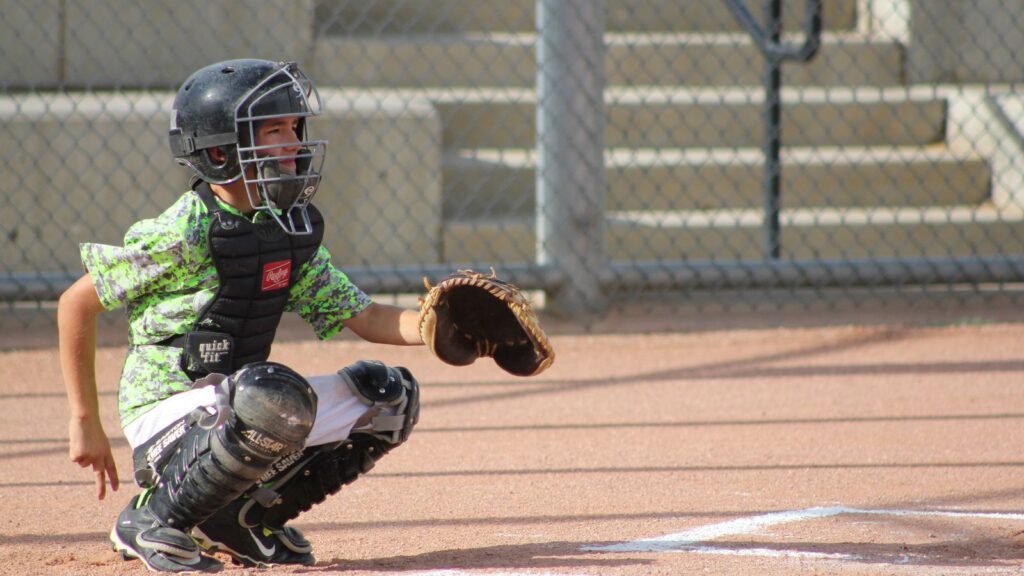
- The catcher’s mitt is padded and rounded so the pitch lands in the pocket, and the padding is a safety item, not a comfort one. No coach would put a catcher behind the plate in an infielder’s glove, and the league usually supplies the mitt for that reason.
Under 9, one glove for every position is fine and normal, because kids rotate through everything and the coaching books want them to. Once a kid settles into a position for a season, usually at the more advanced levels, a position glove is worth it. The one exception at any age is first base: if your kid is playing there regularly, get the mitt.
Get the printable practice sheets your coach is probably using.
A free Fitted Cap God account gets you the 60 and 90 minute youth practice plans as a PDF, saves the guides for the season, and sends the new ones when they land.
Sign Up FreeBreak-In, Leather, and Care
The books are short on break-in recipes and long on the principle: a properly sized, broken-in, well-kept glove makes a kid a better fielder, and a stiff one makes him a worse one. The drills book’s shopping advice is two words: avoid plastic. A cheap synthetic glove is stiff forever and the kid can’t squeeze it, which fails the fit rule on day one. Soft leather or a pre-oiled youth leather glove is the answer at 7 and up; the padded synthetic tee ball gloves are fine at 4 to 6 because nobody is catching anything hard.
The USA Baseball manual tells coaches to teach players how to condition their gloves, because a conditioned glove holds the ball. The honest break-in method is catch: the more balls it takes, the faster it shapes to the hand. Manufacturer sizing pages carry care steps for their leather, and they’re the right source for what to put on it and how much. Keep it out of the trunk in July and off the radiator in March.
What the League Gives You and What You Buy
Most leagues provide batting helmets (a range of sizes, often with face guards), catcher’s gear, balls, and bases. Bats are usually provided at the beginning levels, though many kids want their own. The glove is the one piece of equipment that’s yours to buy at every age, along with cleats past tee ball and a cup for catchers. Write the kid’s name on it; the drills-and-games book’s equipment advice for camps is to label every personal item, and a glove is the item that walks off most.
If cost is a problem, the coaching books point to used-equipment stores and to league loaner gear, and a used leather glove that’s already broken in is often a better glove for a 9-year-old than a new stiff one. Ask the coach at the parents meeting; most leagues have a bin.
Frequently Asked Questions
What size baseball glove for a 7-year-old?
Ten to 10.5 inches for most positions, up to 11 for an outfielder with a big hand. Soft leather or a pre-oiled youth glove, not plastic, and only if he can close it with one hand.
What size glove for a 10-year-old?
Around 10.5 to 11 inches for the infield, 11 to 11.5 for the outfield. A first baseman gets an 11.5 to 12 inch mitt. If your kid is between sizes, take the smaller one.
What size glove for a 12-year-old?
Eleven to 11.5 inches in the infield, 11.5 to 12.25 in the outfield, and this is the year to think about the big-field jump: a 12-year-old outfielder who moves to 90-foot bases next spring will want the longer glove then, not now.
Should I buy a bigger glove for my kid to grow into?
No. It’s the one thing every coaching book agrees on. A glove he can’t close costs him a season of catching, and he’ll need three or four gloves before high school regardless.
What’s the difference between a youth glove and an adult glove?
Size, and the fit. Manufacturers build youth gloves with a smaller wrist opening and tighter finger stalls so they stay on a small hand. An adult 11.5 inch glove and a youth 11.5 inch glove are the same length and fit completely differently, which is why the chart splits at 12.
Sources
- Rawlings baseball glove sizing chart (rawlings.com)
- Drills and Instruction for Coaching Youth Baseball
- Coaching Youth Baseball (American Sport Education Program)
- Coaching Baseball: Technical and Tactical Skills
- Coaching Baseball For Dummies
- Baseball and Softball Drills: More Than 200 Games and Activities
Buy the glove he can close today. The other size chart parents ask about is the one for his head, and that one lives on the hat side of the site: the fitted hat size chart. Next in the gear corner: what a first-year player actually needs, and what he doesn’t.