Coach pitch baseball is the only level of the sport where the coach’s arm decides the game, and almost nobody practices the one skill that matters at it: throwing a flat, slow, identical strike from one knee, fifty times in a row. The league’s page will tell you what the division is. It won’t tell the dad holding the ball that he’s the pitching machine this year, and that the machine needs reps too.
So this is coach pitch from the coach’s side: what it is and where it sits between tee ball and kid pitch, the rules that change, how to actually pitch to a seven-year-old, what to teach at 7 and 8, a 60 minute 8U practice, and game day. It’s the coach-pitch post in our coaching baseball hub, under the what to teach at every age pillar.
What Coach Pitch Baseball Is, and Where It Sits
Tee ball exists because a five-year-old doesn’t have the coordination to hit a moving ball. Coach pitch is the step after it. The coach of the team at bat pitches to his own players, so the kids get to hit pitched balls and field batted ones, and the game keeps moving instead of stalling on a nine-year-old’s fifth straight ball in the dirt.
Most kids land in it at 7, 8, or 9. Under 6 it’s tee ball and coach pitch. In the 7 to 9 bracket, coach pitch is the main program, though some leagues let the kids start throwing late in it. The inning starts when the umpire signals the coach he can deliver.
| Tee ball | Coach pitch | Kid pitch | |
|---|---|---|---|
| Who pitches | Nobody. The ball sits on a tee. | The batting team’s coach. | A player on the fielding team. |
| Typical ages | 4 to 6 | 7 to 9 | 9 and up |
| How the play starts | Ball set on the tee, defense positioned by its coach. | Umpire signals the coach to pitch. | Pitcher toes the rubber. |
| What the kids are learning | Which way to run. Two hands. | Hitting a moving ball. Fielding a real batted ball. | Everything, plus a strike zone. |
If your league still has you on the tee, the tee ball post is the one you want. This one starts the day the tee goes in the shed.
The Rules That Change at This Level
Almost every youth league alters the rulebook for the youngest kids, and no two leagues alter it the same way. Read yours, even if you played in college. Then hand the parents a one-page version, because half of them haven’t watched a game since they were nine. The tweaks you’ll almost certainly see:
- A softer ball, so nobody gets hurt fielding a grounder or spends the season afraid of one.
- Lighter bats, usually with a length-minus-weight limit. A 26-inch, 15-ounce bat is a minus 11, and the league will tell you what number is allowed.
- Coaches on the field during play, positioning kids and telling them where the ball goes before it’s hit.
- Games by the clock, about an hour, instead of by innings.
- Unlimited substitutions, so everyone plays, and equal playing time as a written rule in most rec leagues.
- As many swings as it takes to put the ball in play, in many leagues. Which is why walks mostly don’t exist here.
- No stealing until the pitch crosses the plate, or no stealing at all.
- A mercy rule that ends a half inning at a set number of runs.
- A smaller field. A six-year-old’s legs cover what they cover.
- If the league doesn’t use a pitcher and catcher, a player on each side of the pitching area, or one in it and an extra in the outfield.
Two-out innings show up in a lot of tee ball programs and some coach pitch ones. Ask. And ask about practice limits while you’re there: at this level it’s usually one practice and one game a week, which makes the hour below the whole week.
How to Pitch to a Seven-Year-Old
You are the pitching machine. The machine’s job is to throw the same pitch every time, in a spot the kid can hit, at a speed the kid can time. That’s a skill, and it’s a different one from throwing a baseball well.
- Pitch from the game distance, at every practice. Not closer because it’s easier for you. The kids need to see the ball from where they’ll see it Saturday.
- Pitch from one knee. Standing up, your release point is five feet above a seven-year-old’s strike zone and the ball drops steeply into it. From a knee the ball comes in flat, and a flat ball is a hittable ball.
- Same speed every time. A kid learns timing by seeing the same pitch fifty times, not by guessing which of your three speeds is coming.
- Throw it where they can hit it. Your job is not to get them out. A coach who throws too hard, lets one get away, and plunks a kid has ended that kid’s learning for the day, and maybe the month.
- For the kid who’s already scared, switch to tennis balls. Mix in a couple he has to dodge, which won’t hurt when they hit him. Work back up to the real ball when he stops stepping toward the dugout.
The uncomfortable part: your fifty practice pitches matter more than their fifty swings. Throw them before the kids show up. Against the backstop, from a knee, at a bucket, until it’s boring. If your strikes are inconsistent, the kids’ swings will be too, and you’ll blame the swings.
Most beginner hitting problems start in the setup, before your pitch ever leaves your hand. The batting drills post has the grip, the stance, and the tee and soft-toss work that should come before anybody sees a pitched ball. Turn the toss work into a game by counting balls hit out of the infield. Seven-year-olds will swing at anything for a point.
Get the printable practice sheets.
The 8U plan below runs inside the 60 minute sheet. A free Fitted Cap God account gets you both practice plans as a one-page PDF, saves the guides you’re running this season, and sends the new ones when they land.
Sign Up FreeWhat to Teach at 7 and 8, and What to Skip
Something changes at seven. The six-year-old was chasing a butterfly in right field. The seven-year-old is watching how far the kid next to him hits it and wants to know where he ranks. Some of them want to compete now. That’s the raw material, and it cuts both ways. Keep the competitions team-based and the comparisons stay friendly.
The philosophy for this bracket is fundamentals, because the kid who leaves 8U without a foundation doesn’t progress, and the next coach inherits the problem. The season’s skills, roughly in the order the books lay them out for 6 to 9:
- A four-seam grip and an overhand throw. Catching with two hands, ball in the middle of the body.
- Fielding a ground ball and throwing it to first. Running to first, hard, every time.
- Hitting off the tee, then off you.
- Fielding a fly ball and throwing to the right base.
- Late in the season, a bunt, and running from first to third on a hit.
Skip everything else. No kid pitching mechanics beyond playing catch the right way. No stealing, since most leagues won’t let them anyway. Nothing with a curveball, ever, and not before 14 at the earliest. Sliding stays on a pillow in the grass.
And don’t let practice become one long scrimmage because the kids beg for it. At 6 to 9 the books are blunt: too much time just playing games and skill level stays low. The game is the last block, not the whole hour. What comes next, when the kids take the ball, is the 10U practice plan.
A 60 Minute 8U Practice Plan
One practice a week, one hour. Three stations at about seven minutes each, a coach or a parent at every station, nobody standing in a line. Same shape every week, so by the third practice they run it without you.
| Minutes | Block | What happens | Equipment |
|---|---|---|---|
| 0 to 5 | Meeting | Roll call. One sentence on today: “We’re hitting the ball off the coach today.” Eye contact with every kid. | None |
| 5 to 15 | Warm-up | One lap of the field, a circle stretch, then sprints. Let a different kid lead the stretch each week. | None |
| 15 to 25 | Throwing | Glove position: coach throws above the waist, then below, one kid at a time, a line per adult. Then partner catch, close and light. For 6 and 7 year olds, finish with the accuracy game where a bounced ball counts as long as it’s kept in front. | Safety balls, one per pair |
| 25 to 45 | Three stations, 7 minutes each | Station 1: tee into a net with whiffle balls. Station 2: coach pitch from one knee at game distance, a parent feeding balls, four swings then rotate. Station 3: a parent rolling grounders, then the football drill (kid hands you the ball, runs, you throw it high like a pass). | Two tees, whiffle balls, a bucket of safety balls, helmets |
| 45 to 55 | The game | A coach-pitch scrimmage with runners on base before each pitch, or the four-corner throwing game in squares of four. | Throw-down bases |
| 55 to 60 | Cool-down | Water. One specific good thing, by name, for as many kids as you can get to. When the next practice is. | None |
The football drill is the one they’ll ask for. Score it: five catches each, ten points for a catch, five for a glove on the ball, and set a team total they have to beat. You control the throws, so you control who gets to be a star. Make it the kid who needs it.
Equipment for the whole hour fits in one bag: rag balls or safety balls, a couple of extra gloves for the kid who forgot, bats, two tees, a fungo, helmets. The 60 and 90 minute templates this plan comes from are in the practice plan pillar. More games for the last block are in the practice games post.
Game Day at 8U
You’re on the field with them, and that’s the whole job. Before every pitch, tell the kids where the ball goes if it comes to them. After the pitch, coach the next play, not the last one.
- Put a parent or the last batter at first base as the first-base coach. Two jobs: cheer the runner down the line, and tell him how many outs there are. Kids lose the count every inning.
- Rotate positions every game and write down who played where. Six games in, a parent will ask why their kid hasn’t played shortstop, and the answer should be a piece of paper.
- Use the unlimited subs. Everyone plays, and tell them their position each inning, because they won’t remember.
- Save the fundamentals for practice. A kid at the plate thinking about his back elbow isn’t watching the ball. Let them compete, believe out loud that they can, and be there when they don’t.
- The scoreboard doesn’t matter here, and the kids will believe that exactly as much as you act like it.
Every other level of baseball, the coach’s job on game day is to manage. At coach pitch it’s to throw strikes. Which means the most important player on the field spent zero minutes practicing.
Frequently Asked Questions
What does coach pitch baseball mean?
It’s the youth division after tee ball where the coach of the team at bat pitches to his own players. Kids get to hit a pitched ball and field a batted one, and the game keeps moving because the coach can throw strikes and a seven-year-old can’t.
What age do kids start coach pitch baseball?
Usually 7, after a year or two of tee ball, running through 8 or 9. Some leagues start it at 6 and some let kids pitch late in the 9-year-old season. Your league’s age chart decides it, not the kid.
Can you walk a kid in coach pitch?
In most leagues, no. The coach isn’t trying to throw balls, and the kid gets either as many swings as it takes to put the ball in play or a set number of pitches before he’s out or moves on. That’s league-specific, so check the rulebook.
What baseball does coach pitch use?
Most beginner leagues use a softer safety ball so kids don’t get hurt or scared fielding it, and they limit bats by a length-minus-weight number. The league supplies the balls and will tell you the bat rule.
Does coach pitch use a catcher?
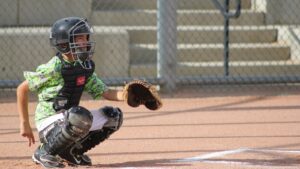
Some leagues do, in full gear. Many don’t use a pitcher or a catcher at all and put a player on each side of the pitching area instead, or one in the pitching area and an extra kid in the outfield. Ask before you buy the gear.
Sources
- Coaching Baseball For Dummies
- Coaching Youth Baseball (American Sport Education Program)
- Drills and Instruction for Coaching Youth Baseball
- The Baseball Coaching Bible
- Baseball and Softball Drills: More Than 200 Games and Activities
At coach pitch the coach’s arm is the game. Practice it like it is. When the kids take the ball next year, the 10U plan is what changes.