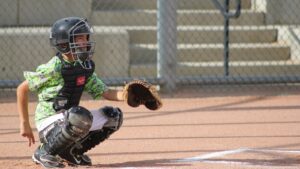
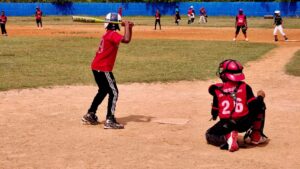
The reason a drill works at ten and flops at six isn’t the drill. It’s that a six-year-old’s attention span is measured in seconds and a ten-year-old has a poster of a big leaguer on his wall and wants to be him. What to teach in youth baseball at every age is mostly a question of what the kid in front of you can hold onto this week, and what you should leave alone until next year. The coaching books are unusually clear on this, and they mostly agree.
This is the by-age pillar of our coaching baseball hub. The clock lives in the practice plan and the drills live in the master list. This post is about which of those to use when, from tee ball at four to the full-size field at fourteen.
The Rule Under Every Age: One Thing at a Time
Before the age bands, the rule they all share. Kids who can’t master a skill are almost always trying to fix two things at once. Hitting has four pieces (grip, stance, stride, swing) and the book that runs USA Baseball’s coaching program says to teach them one at a time, in that order, and not to move on until the first one holds. The same goes for a throw, a ground ball, a slide.
The other shared rule is that the game itself is the best teacher, in small doses. Practice built from game-like drills develops kids faster than lines and lectures, but at the youngest ages you can overdo the scrimmage and end up with a team that plays a lot and can’t do much. Skill work first, then the game that uses it.
The short version: under 8, teach catch, throw, and the tee, and nothing about situations. At 9 and 10, add pitching and force plays. At 11 and 12, add leads, steals, and cutoffs. At 13, the field doubles and you start over on arm strength. Everything else waits.
Ages 4 to 6: Tee Ball
Nobody at this age knows how to hold a bat, use a glove, or run the bases, and most of them have never been on an organized team. They’re excited about the uniform and their friends. Many programs don’t keep score, and the ones that do are fooling themselves.
Teach four things and only four. Catching with two hands and the ball in the middle of the body. Throwing with the basic positions (feet, then arm). Hitting off the tee, counting line drives. Running to first base after a hit. That’s the whole season. A fifth thing is a bonus.
Leave alone: positions, situations, cutoffs, anything that involves a decision. Five-year-olds all run to every ball and end up in a pile fighting over it, and the most you can do is get them to stay near their spot and field what comes close. The book that covers this literally says the defensive diagrams don’t apply to tee ballers.
Practice is one hour, once a week, plus a game, and each activity lasts eight to ten minutes before you lose them to a butterfly. Parents get one thing wrong here more than anything else: they want their kid to look like a shortstop. He’s four. He’ll look like a shortstop in five years if he still likes baseball, and the only job this season is making sure he does. The tee ball practice plan has the week.
Ages 7 to 8: Coach Pitch
Something changes at seven. They start watching each other. Who hits it farther, who can catch a pop-up, who got a hit last game. Some of them want competition for the first time, and some of them have watched an older sibling get applause and want their share.
The format is coach pitch, and the season plan for this band starts with throwing and catching mechanics, then ground balls and the throw to first, then hitting mechanics off the tee, then fly balls, then running form. Bunting shows up around the fifth practice in the USA Baseball season plan, which surprises people, but it’s a contact skill and eight-year-olds can do it.
Teach: hitting a pitched ball (you pitch it, from one knee, flat, from the game distance), the fielding position with the glove on the ground, throwing to a base, and the first real baserunning (run through first, round it on a hit). Hold: pitching, leads, cutoffs, double plays. A few programs let kids pitch at eight. The books don’t recommend it, and neither do I.
Still one practice a week, still an hour, ten minutes per activity. The parent mistake at this age is pushing the competition the kids just discovered. The book’s word for the coaching job at 7 to 9 is foundation: if the fundamentals aren’t there now, nothing built later holds. The coach pitch guide covers the rules and an 8U practice.
Ages 9 to 10: Kid Pitch and the First Catchers
This is the year baseball starts mattering to them. The books put it at 10 to 12: posters on the wall, stats memorized, copying what they see on TV. Winning and losing take on weight. Most of them have a couple of seasons behind them and they want you to take them somewhere.
The two new skills are pitching and catching, and both need their own time outside the team practice. Pitchers come early for three practices to run dry drills and light throwing while you pick them. Catchers stay late. On the mound it’s a fastball and nothing else; the books say a fastball and maybe a change-up are the only pitches a player under 14 needs, and that a more efficient delivery, not more effort, is where velocity comes from.
The season plan adds force plays at second, covering bases, rundowns, defending home on a ground ball, and an introduction to the hit-and-run. Practice grows to 90 minutes, one or two a week, and you can run twelve to fifteen minutes per station now.
Hold: breaking balls (banned in most leagues, and dangerous for a reason), leads and steals in leagues that don’t allow them yet, and anything tactical about the other team. At 10 and 11 the opponent’s strengths and weaknesses are of no concern; the whole job is executing what you taught. The parent mistake is the dad behind the backstop who wants the kid to throw harder and learn a curve. Both make him worse. The 10U practice plan and the pitching drills are built for this year, and the pitch count rules are not optional.
Get the printable practice sheets for your age group.
A free Fitted Cap God account gets you the 60 and 90 minute practice plans as a one-page PDF, saves the guides you’re running this season, and sends the new ones when they land.
Sign Up FreeAges 11 to 12: Leads, Steals, and the Cutoff
The last two years on the small field, and the first years the game looks like baseball. The season plan for 12 to 14 adds stealing and holding runners, rundowns and cutoffs, the hit-and-run as a real play, and force plays turned with some speed. Where the league allows leads, this is when you teach them.
Teach: taking a lead and sprinting to second, tagging up at third, the change-up as a second pitch, outfielders throwing to the relay man, defending first-and-third. Kids at 12 can start reading one or two of the other team’s tendencies and using them. Games go five innings now, and there are usually two a week in the busy stretch, so trim practice in those weeks instead of piling it on.
Hold: the curveball, still. The book says at least 14. Hold the squeeze and the pickoff plays until the basics are automatic, because a play that needs four kids to be right is a play that fails when one of them is nervous.
The game is when a kid’s mind should be clear. Don’t fill it with three mechanical fixes between innings. That’s what Tuesday was for.
The parent mistake at 11 and 12 is coaching from the fence during the game. The drills book is blunt about it: game time is for competing, not for fundamentals, and the coach’s job is to believe in them out loud and take notes for the next practice. The 11U to 12U practice plan has the situational work.
Ages 13 to 14: The Big Field
At 13 most leagues move to the full-size field: bases 90 feet apart instead of 60, and the mound at 60 feet 6 inches instead of 46. Every throw got longer, every ground ball has more time to find a hole, and the kid who was a shortstop because he had the best arm at 12 might not have it at 13. You start over on arm strength.
Teach: long toss with a slight arc every practice, relays as a real system (the ball can’t get from the fence to the plate on one throw anymore), pitching from the stretch with runners who can actually lead, and reading the opponent. Kids at 13 and 14 can use more complex team plays: the squeeze, the steal, the pickoff. They’re also, in the book’s words, on a journey of self-discovery, which is a polite way of saying teenagers, and the coaching needs a different touch than it did at ten.
Practice is 90 minutes to two hours, two games a week is common, and the two-hour version splits cleanly: skill frames for the first hour, live hitting and pitching for the second. Breaking balls become a question at 14, and the answer is still a question. The book that permits them at 14 also says the fastball and change-up should carry the load. The big-field guide covers the jump.
What to Teach at Every Age: The Table
| Age | Format | Practice | Teach this year | Leave alone | What parents get wrong |
|---|---|---|---|---|---|
| 4 to 6 | Tee ball, no score, two-out innings, time-limit games | 60 min, once a week, 8 to 10 min per activity | Two-handed catch, basic throw, hitting off the tee, running to first | Positions, situations, anything with a decision | Wanting him to look like a shortstop |
| 7 to 8 | Coach pitch | 60 min, once a week, 10 min per activity | Hitting a pitched ball, fielding position, throwing to a base, bunting, running through first | Pitching, leads, cutoffs, double plays | Pushing the competition they just discovered |
| 9 to 10 | Kid pitch, small field | 90 min, one or two a week, 12 to 15 min per station | Pitching (fastball only), catching, force plays at second, rundowns, defending home | Breaking balls, tactics about the other team | Throw harder, learn a curve |
| 11 to 12 | Small field, five-inning games, leads where allowed | 90 min, one or two a week | Leads and steals, holding runners, cutoffs and relays, change-up, first-and-third, hit-and-run | Curveball, squeeze and pickoffs until basics are automatic | Coaching mechanics from the fence during games |
| 13 to 14 | Full field: 90-foot bases, 60 ft 6 in mound | 90 to 120 min, two games a week common | Arm strength daily, relays as a system, stretch with real leads, reading the opponent, squeeze and pickoffs | Breaking balls until at least 14, and sparingly then | Assuming the 12-year-old shortstop is still the shortstop |
The formats and field sizes vary by league and by town. Some places let kids pitch at eight, some keep tee ball to five, some skip coach pitch entirely. Find out before you plan, because a plan for two practices a week is useless where the league allows one.
Frequently Asked Questions
What age should kids start baseball?
Tee ball programs usually start at five, because a five-year-old can’t hit a pitched ball yet and the tee removes that problem. Four works if the program allows it and the kid wants to be there. Nothing before that is baseball; it’s running around, which is fine.
At what age should a kid learn to pitch?
Kid pitch starts at 9 in most leagues, some at 8. The books say a fastball and maybe a change-up until 14, no breaking balls before then, and pitches counted by the pitch, not the inning. A kid who wants to pitch at 8 can run the dry drills all season and be ahead of everyone at 9.
When should kids learn to slide?
When the league lets them steal or when they start rounding bases at speed, which is usually 8 to 10. Teach it on soft grass, wet if you can get it, with a pillow behind each kid the first time. Two body lengths from the bag is the rule of thumb for where the slide starts.
How long should practice be at each age?
An hour at 5 to 8, because that’s usually all the league allows and all the kids can take. Ninety minutes at 9 to 12. Ninety minutes to two hours at 13 and up, split in half if you get the full two. A planned hour beats a sloppy two at every age.
Should a 12-year-old throw a curveball?
No. The book that’s most permissive says 14 at the earliest, and even then the fastball and change-up should carry the load. A 12-year-old who can command a fastball on both sides of the plate doesn’t need a curve to get anyone out.
Sources
- Coaching Youth Baseball (American Sport Education Program)
- Coaching Baseball For Dummies
- Drills and Instruction for Coaching Youth Baseball
- Coaching Baseball: Technical and Tactical Skills
- Baseball Field Guide: The Complete Rules of Baseball
The age tag is the whole trick. A drill that’s wrong for the year is wrong, no matter how good it is. Next: the practice plan for the clock, and the first-time coach guide for everything that isn’t baseball.