Most people can name two parts of a fitted hat: the brim and the part that goes on your head. That is fine for a stadium giveaway, but if you collect, the vocabulary matters. Knowing the parts of a fitted hat tells you whether a cap is on-field quality or a fashion knockoff, why one undervisor ages better than another, and where fakes get sloppy. This is the full anatomy of a 59FIFTY, from the squatchee down to the taping, in the language collectors actually use.
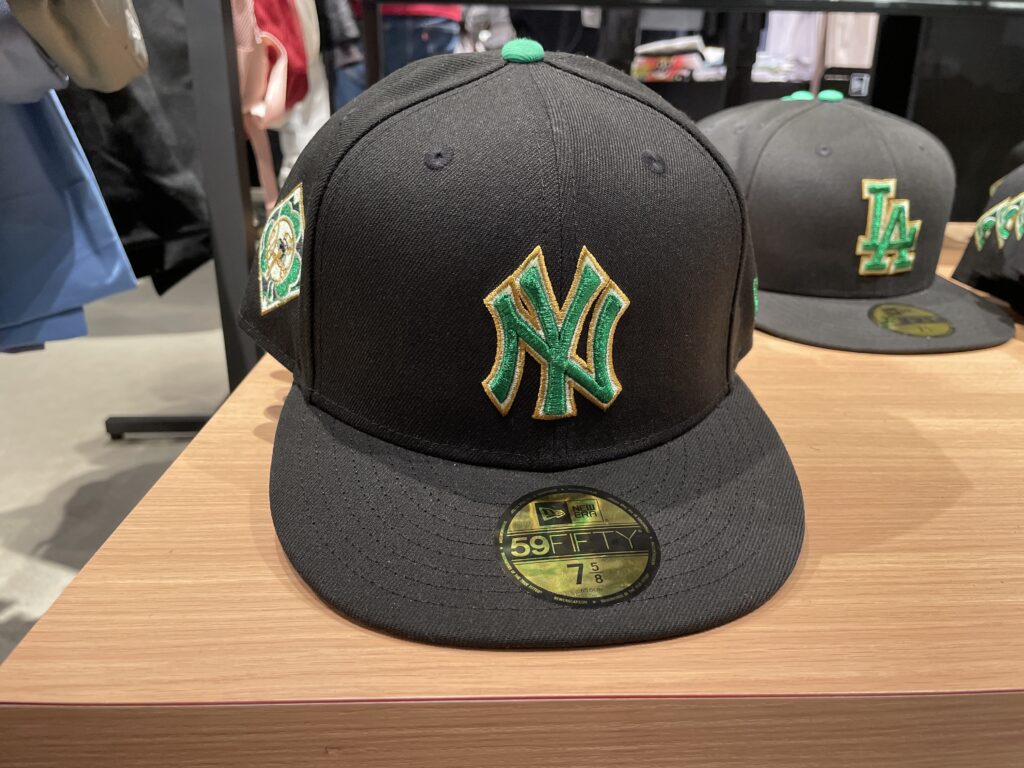
The Crown: Panels, Eyelets, and the Squatchee
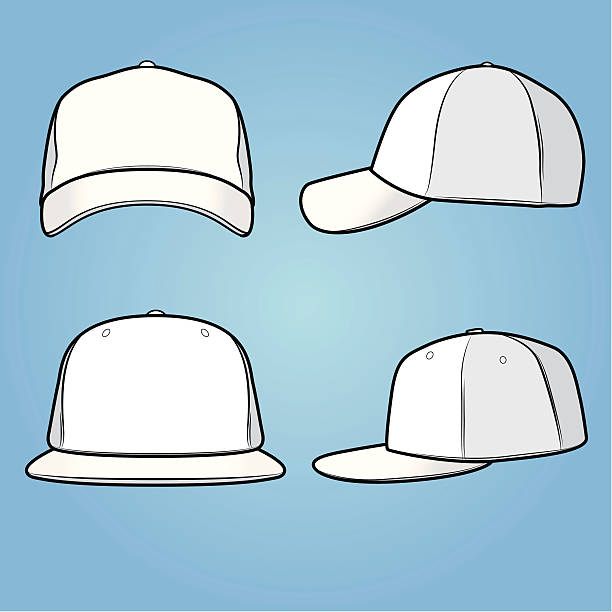
The crown is the dome that sits on your head. On a real 59FIFTY it is always six panels, six triangular pieces of wool-blend fabric stitched together like slices of a pizza.
If you count five panels, it is not a 59FIFTY. New Era makes five-panel and other silhouettes, but the classic fitted is six, every time.
Where those six panels meet at the top, there is a fabric-wrapped button. That is the squatchee (also spelled squatcho). It once held the panels together structurally. Now it is cosmetic, color-matched to the crown, and one of the first places a cheap cap gives itself away with a crooked or oversized button.
Each panel has an eyelet, a small embroidered or metal vent hole, six total. They are there to let heat escape. On a quality cap the embroidered eyelets are tight and uniform. On a fake they pucker.
- Front two panels: where the team logo goes, and where structure lives
- Side and back panels: often where you’ll find a side patch or a flag
- Eyelets: six, one per panel, for ventilation
- Squatchee: the fabric button at the apex
The Brim, the Visor, and the Undervisor
The brim (also called the visor) is the flat or curved ledge that shades your face. On-field 59FIFTYs ship with a flat brim and a manufacturer’s sticker on it. Whether you keep that sticker is a whole debate, and we have a take on the sticker-on-or-off question if you want it.
Flip the cap over and you are looking at the undervisor, the underside of the brim. This is the single most slept-on detail in fitted-hat collecting, and it carries real history.
For decades the undervisor was green, because teams believed green cut the glare of sun bouncing off the grass. Then in 1990 the Cincinnati Reds switched theirs to grey, won the World Series that same season, and the grey undervisor caught on fast. By 1995 every MLB team had moved to grey. By 2007 black undervisors had become the on-field norm.
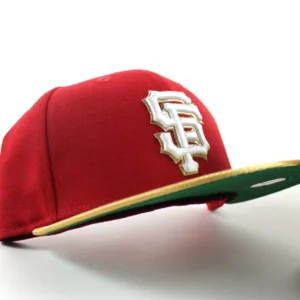
For collectors, the undervisor color is a styling choice and a tell-tale of the era a cap references. Grey, green, pink, red, and black undervisors all carry different meaning, and we break down what each one signals in our guide to undervisor colors.
The grey bottom ages better than the white-stitched fashion versions, and it is not close. White undervisors and grey-on-the-bottom retail exclusives scuff and yellow within a season.
Inside the Cap: Sweatband, Taping, and Buckram
The parts you cannot see are what separate an on-field 59FIFTY from a $15 fashion cap.
The sweatband is the strip of fabric stitched along the inside bottom edge of the crown, the part that rides against your forehead. It is your primary contact point with the cap, so it does the work of wicking sweat and holding the fit. A flimsy or scratchy sweatband is the fastest way to tell a corner was cut.
Run a finger up the inside seams and you will feel taping, the cloth that covers and reinforces the seams where the six panels join. Clean, consistent taping is a quality marker. Loose threads and uneven taping show up on fakes, which is one of several things to check when you are trying to spot a fake 59FIFTY.
Behind the front two panels sits the buckram, a stiff cotton fabric dipped in a plastic-like coating. Buckram is why a structured cap holds its dome shape on a shelf and your logo stays crisp instead of caving in.
Structured vs Unstructured
A structured crown has buckram behind the front panels, so it stands tall and keeps its shape off your head. The 59FIFTY is structured. That is the look most people picture.
An unstructured crown has no buckram, so it slouches and feels softer, closer to a dad hat. Neither is wrong. Just know which one you are buying, because a structured cap photographs taller and an unstructured one wears more relaxed.
The Side Patch, the Flag, and On-Field vs Fashion
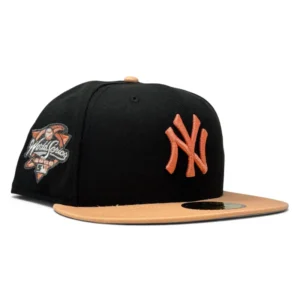
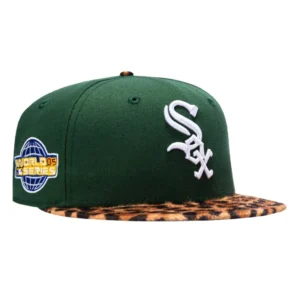
The small embroidered or woven badge on the left side panel is the side patch. New Era’s own flag logo lives there on most caps, but anniversary patches, World Series patches, and stadium patches are what turn an ordinary colorway into a grail.
Side patches are also how retailers manufacture scarcity. Most “limited” patch drops are only limited to that one retailer, not actually rare. A patch alone does not make a cap valuable, the demand does.
This is also where the biggest line in fitted hats sits: on-field versus fashion.
| Feature | On-field 59FIFTY | Fashion fitted |
|---|---|---|
| Crown | Structured, buckram | Often softer, less support |
| Fabric | Wool blend, MLB spec | Cheaper poly blends common |
| Undervisor | Grey or black, on-field colors | Any color, novelty bottoms |
| Use | What players actually wear | Built for style only |
On-field caps are the exact spec MLB players wear. Fashion fitteds use the same silhouette with looser tolerances and wilder colorways. Both are legitimate, but you should never pay on-field money for fashion construction.
Frequently Asked Questions
What is the button on top of a fitted hat called?
It is called the squatchee (sometimes squatcho). It is the fabric-wrapped button at the very top of the crown where all six panels meet. It used to hold the panels together structurally, but on modern fitteds it is mostly cosmetic and color-matched to the crown.
How many panels does a 59FIFTY have?
Six. A true New Era 59FIFTY always has a six-panel crown, with one eyelet vent per panel. If you count five panels, you are looking at a different silhouette, not a classic fitted, regardless of what the listing says.
Why are the undervisors on baseball caps grey or green?
Green was the original on-field color because teams believed it reduced glare off the grass. The Reds switched to grey in 1990 and won the World Series, and by 1995 every MLB team had followed. Black became the on-field standard by 2007.
What is the difference between a structured and unstructured fitted hat?
A structured cap has stiff buckram behind the front two panels, so the crown stands tall and holds its shape off your head. An unstructured cap has no buckram, so it slouches and feels softer. The 59FIFTY is structured.
What is the band inside a fitted hat called?
The sweatband. It is the strip of fabric stitched along the inside bottom edge of the crown that sits against your forehead. It wicks sweat and helps hold the fit, and a cheap, scratchy one is a quick sign of low-quality construction.
Bottom line: Six panels, a squatchee, eyelets, a structured buckram crown, a sweatband, clean taping, an on-field undervisor, and a side patch that earns its keep. Learn the parts and you will never overpay for fashion construction again.
Now that you can read a cap part by part, the next move is finding the colorways worth chasing. Browse fitted lineups by club through the MLB team hub, or jump straight to a flagship like the New York Yankees or Los Angeles Dodgers to see how these parts come together on the real thing.